
What we can learn from Elizabeth Gilbert's crazy-ass memoir
Self-responsibility as the ultimate form of healing

I’ve been thinking a lot about personal responsibility lately.
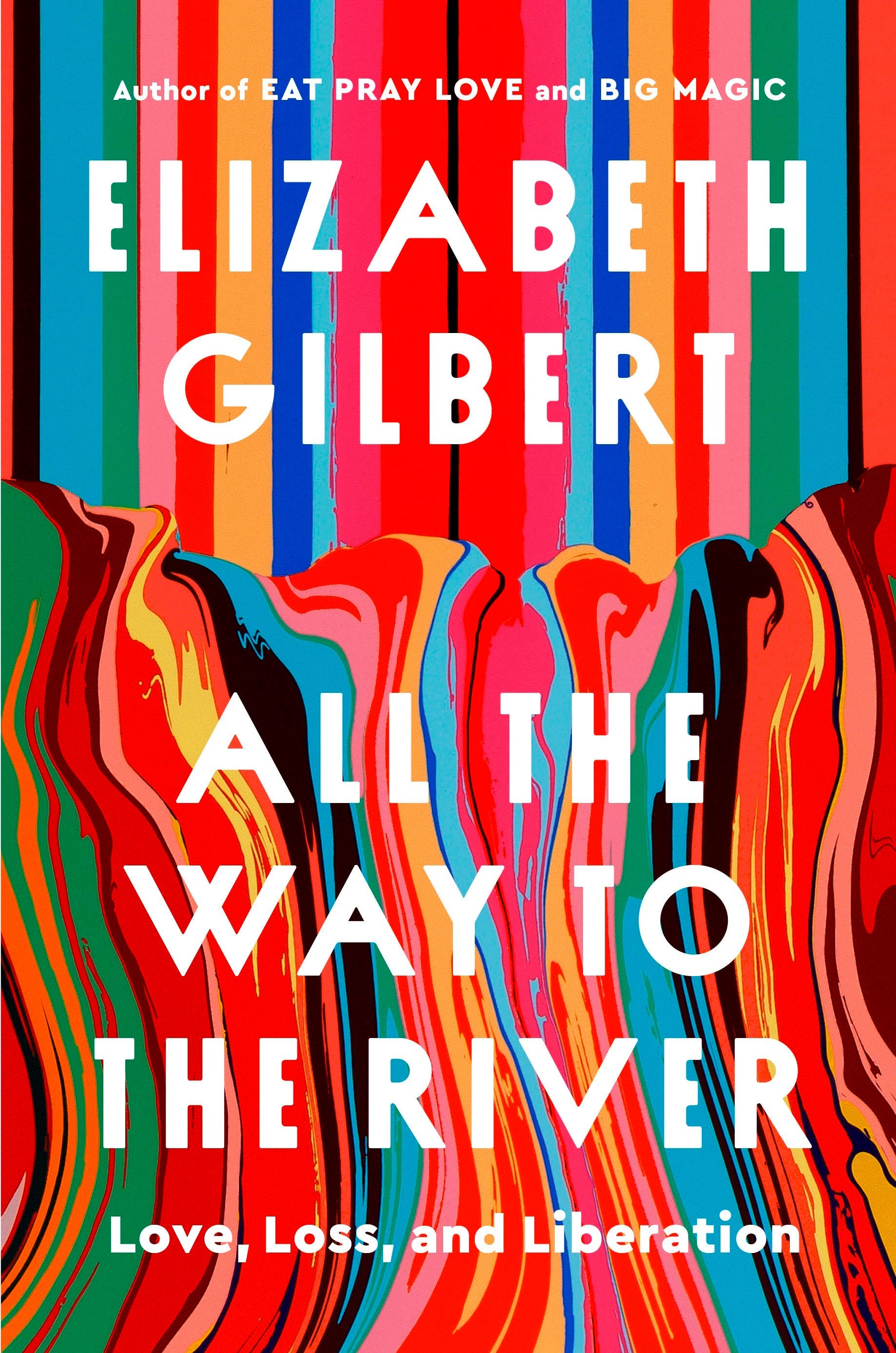
Not least of all because I just finished reading Liz Gilbert’s third (controversial) memoir, All The Way To The River. Every time I read about this book (which is getting a LOT of airtime in the online literary world), it’s largely described as a memoir about love and sex addiction, or more broadly about addiction, period. Or about the death of her partner, Raaya. Whilst those descriptions of this book are not wrong – it is about Liz Gilbert’s recovery from love and sex addiction and her former partner Raaya’s addiction to drugs and alcohol, relapse and eventual death from cancer, I largely felt the soul of this memoir was a reckoning with self-responsibility.
Of course, anyone even remotely familiar with the parlance of recovery will know that self-responsibility is at its core (“you are only as sick as your secrets”, “nothing changes if nothing changes”, “ don’t take someone else’s inventory” and so on). I myself have never been in a 12-step program but I am fascinated by them, and once took myself through my own cobbled together version of a few of the steps (making a moral inventory and making amends) because I knew there were parts of me that were longing to be nurtured that couldn’t be without a true reckoning of the self. After going through that process, my life improved dramatically. It was a path to personal freedom that required looking – truly looking – at myself, my past and what I wanted for my future.
Since that time, I have thought a lot about what I call the “grey area” of addiction. This murky pond is where, I believe, the vast majority of us live our lives. Not so addicted to a thing that our life has fully imploded, become unmanageable or even requires complete abstinence from the object/s of our addiction. And because it does not require this complete and total attention most of us never do this work. Speaking from my own experience, I was always able to point to someone who was way worse than me, or say well it’s not that bad, or I don’t exhibit this behaviour and therefore I don’t need to overhaul myself, my behaviour or, indeed, my life. This fallacy (this delusion) keeps so many of us stuck in unhealthy – but not unmanageable – patterns for eternity. And surprise surprise, It’s not actually a great way to live. But it’ll do, we tell ourselves. Seems easier than facing the demons, right? If it ain’t broke, don’t fix it. But what about if it’s hurt? What about if it’s suffering?
I imagine that the vast majority of people who are swimming in the murky grey pond of “not bad enough” (whether it’s love and sex, drugs, alcohol, gambling, technology, consumerism – you name it), will read Gilbert’s memoir and fail to see themselves in it. After all, it is pretty sensationalist. She literally admits to planning to murder her partner as a result of her love and sex addiction. It’s very easy to read it and say wow, the Eat Pray Love lady went mad! This is a riveting story and not one that has any bearing on my own life! Or they will read about the height (and soaring low) of Raaya’s drug addiction and think to themselves that their consumption of drugs and alcohol pales in comparison and therefore her story has nothing to do with theirs.
I wrote about an affair I was embroiled in in my twenties here. And I was recently unpacking it in great detail with a friend who with whom I’d never shared the weight of the story and its impact on me (which will truly be lifelong). In the telling, I was at pains to constantly acknowledge my role and my responsibility. She said I was giving him a lot of grace – perhaps too much – and yet I refuse to see it that way.
We are all responsible for our own wounds and our own healing. We don’t find ourselves with chronic liars living double lives (the case for me), or living with a drug addict (the case for Liz Gilbert) or simply in a toxic dynamic without playing a part in a kind of trauma bonding.
At the time of my aforementioned affair/relationship/dumpster-fire, I didn’t know what trauma bonding was. I’ve since learned that it is essentially where two people’s unique set of wounds – whatever agony is found in their personal history – is set alight by someone else’s different but “complementary” pain. These composite wounds are stirred vigorously into a Molotov cocktail of toxicity, as two people play out their stories and patterns on one another until there is very little left to salvage. Except, hopefully, themselves via the lessons they learn from the experience.
The resounding message I took from Gilbert’s memoir was that her relationship with Raaya, with all its complexity, was something she now sees as a gift. A lesson that was delivered to her from the universe, to help her finally salvage herself from her own dysfunction. She finally took self-responsibility for the role she played in something that would be very easy to blame on her drug-addicted partner. Despite the wildly different contents of her story to mine, I related deeply to the whole thing.
Until we understand our emotional landscape, we continue to engage in relationships and dynamics of all kinds for which it can be far too tempting and far too easy to blame others. Blame circumstances. Blame our pasts, our parents and everyone and everything in between. Self responsibility is the means through which we turn “but for this…” into “but for me…”.
If something happened to you (in a relational context) it also happened with you or because of you. This might be an unpopular opinion, and you might be quick to flag any number of situations where there might seem, on its face, to be a completely innocent victim. But the human capacity for denial, manipulation, greed and capacity for self-abandonment all create and allow relational dynamics to exist, even if we want to claim total victimhood. I know I have, and I also know that the only reason I am now capable of true love – love that transcends greed and is not extractive – is because I accept the role I have always played in my own suffering. And when I now suffer in my relationship (as is inevitable, from time to time), that suffering ends a lot faster when I take my share of personal responsibility even when it feels like it’s ALL HIS FAULT, WAHH!! (lol, it literally never is).
I think a lot of people will read Gilbert’s memoir and kinda think girl, Raaya was waaaay more to blame than you. But this is the honeytrap we get stuck in, running rings to avoid personality responsibility. It’s not about metering out proportionate blame. Percentages don’t factor into personal responsibility, because once you see your part, that’s all you need to work with. Their part is theirs to hold, or to deny. And acknowledgment of your part is a gift you give yourself in the form of personal evolution.
Whether or not you have opinions about Gilbert’s memoir, I ask you the following: what have you allowed, ignored, encouraged, chased or demanded in service of your desires or delusions?
And are you also, perhaps, in the murky grey pond of “not bad enough”?
Oooft. You're really hitting on some big things here. "If something happened to you (in a relational context) it also happened WITH YOU or because OF you." Also love "It’s not about metering out proportionate blame." True true true!