
Let yourself be loved
Wounds, masks and uncurling the fist of hyper-indepedence


I am re-reading a book called Heal Your Wounds by psychologist Lise Borbou at the moment.
The basic premise of the work is that, in early life, we experience moments where we don’t feel wanted, supported, trusted, respected, or treated fairly. To cope, we adapt by building masks. These patterns of behaviour are highly effective at shutting the pain out. But as we grow into adults, these masks are precisely what sabotage our ability to live authentically.
I’m not gonna lie, when I first opened this book it felt very hoo-ey to me. The author bases her work on her own clinical observations over her decades of practice. Which would be all well and good, until she introduces the idea that our core wounds actually express themselves in the body type we carry (lol, what?). For each wound (and accompanying mask - I’ll explain more about this in a minute) she provides a sketch of the body type a person with this core wound would tend to have. Come onnnnn was my first thought.
But then I persisted with the book, and as I reached each core wound and mask (and sketch of the body) I would conjure in my mind’s eye an image of someone close to me with the body type described. And lo and behold, it was as though I was reading a detailed analysis of their personality, habits and defences, right down to the language they commonly use about themselves or when in conflict (she includes a list of common phrases for each archetype). Honestly, it was quite scary. Now, I know this isn’t a scientific way to approach anything. But I do believe when we recognise the truth in something, it generally reverberates like a very loud gong through our body. And that’s how I felt when I read this (very digestible) little book about wounds and masks. If anything the body type sketches made me more, not less, convinced that this Lise Borbou lady was on to something.
Most of us recognise ourselves in more than one archetype/wound. Here is a very brief summary (read the book!!):
Rejection (wound) → the Withdrawn (mask)
Core fear: “I’m not wanted.”
Tends to pull away, disappear, self-edit
Avoids being fully seen in case it leads to rejection
Often very thin, slight, or underdeveloped
Abandonment (wound) → the Dependent (mask)
Core fear: “I’ll be left.”
Seeks reassurance, closeness, emotional availability
Struggles with being alone or unsupported
Rounder, softer body, especially in the torso
Humiliation (wound) → the Self-Sacrificer (mask)
Core fear: “My needs are too much.”
Puts others first, suppresses desire
Feels guilt around rest, pleasure, or receiving
Heavier body, often carrying weight around the belly, hips, chest, and face
Betrayal (wound) → the Controller (mask)
Core fear: “I can’t trust.”
Needs to stay in charge
Finds vulnerability risky, dependence unsafe
Strong, powerful build broad shoulders (especially noticeable in the upper body)
Injustice (wound) → the Perfectionist (mask)
Core fear: “Feelings aren’t safe.”
Values control, correctness, and composure
Struggles with softness, messiness, or emotional expression
Well-proportioned, symmetrical, upright, stiffness in posture
The irony is that often the traits of which we are most proud – independence, competence, strength, selflessness – are also tied to the very wounds we haven’t healed. And the things that trigger us most in others usually point straight back to our own wounds. Can’t stand it when your bestie is controlling? Soz babes, but you’re probably a control freak, too. Feel outraged when a loved one doesn’t go out of their way to make time for you in their incredibly busy schedule in which they barely have time for themselves let alone others? Hello Humiliation & Injustice wounds! Welcome!
The first time I read this book, my husband and I read it together on our respective Kindles (cute!). Afterwards, I was like “well I obviously have Abandonment and Betrayal and none of the others”. He laughed out loud and then, upon seeing my deadpan reaction, said “oh you’re serious?” and then gently added, “...You don’t see any others?”. He pointed me towards Injustice and after some protest I reviewed the archetype and realised it was probably one of the strongest wounds/masks I carry.
It’s incredible how hard it is to really see ourselves sometimes, without the loving guidance of someone we trust, who we know only wants the best for us to hold our hand and gently say, but what about this?
Which brings me to the idea of letting ourselves be loved.
On its face, it seems like the easiest thing we can do, right? Easier than loving someone else, surely? But with all these wounds and masks (that are just egg on our face we can’t see) it’s tough.
For the longest time – until very recently, if I’m honest – I’ve always had a deep, abiding sense of my own aloneness. Like, sure, I have friends and family who “love” me, but if push comes to shove, it’s me against the world. What I would once have called my independence (proud of it!) I can now see as a wound trying to wear a cute outfit without being discovered.
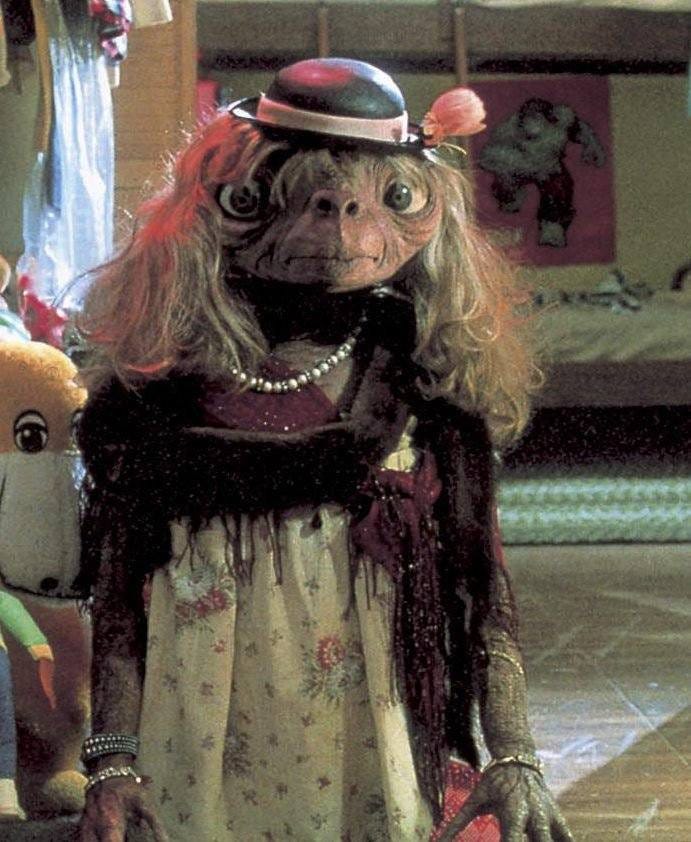
I can see now that hyper-independence ( that says I don’t need anyone or anything, I can do it all alone!) is a way I avoided softness. It’s a way that I avoided letting myself be truly seen, and thus truly loved.
The work I’ve done in recent years to untangle a lot of that mess, has not only let me rely on other people, it has genuinely deepened my relationships. I feel so much more able to give because I’m more able to receive. And in that reciprocity, there is a relief. A tightly curled fist, blue from the pressure of self-dependence letting blood pulse back into its fingertips. Warm hands.
I’ve had a few experiences lately that have reminded me of how loved I am. I feel super cringe even writing that sentence because, well, it sounds kind of braggadocious to talk about being loved. BUT THIS IS THE WORK, AMIGOS!
On my recent trip home to Australia from Mexico, I didn’t have the bandwidth to fly my family to Melbourne and assumed (Rejection wound!) that no one would bother to fly from Melbourne to see me, so I’d miss out on nurturing those relationships. I made the decision already having resigned myself to that reality. Then six friends (each of whom have young families, partners and/or big life stuff going on) flew to Sydney just to see me. One made the round trip within a single day.
Then, when I returned to Mexico, one of my best friends here planned a baby shower without any input from me. And my seven dearest friends all assembled on a rooftop, bringing food, flowers, mimosas, cards, laughter and tears. I was celebrated in a way that really moved me. In a way that asked nothing of me, other than to show up and let myself be loved.
So, as we approach Valentine’s Day, I know some people will be feeling the weight of their wounds. Perhaps love feels scarce in your life right now. Perhaps you read this and thought, well hooray for you bitch, it’s not like that for me. To that I say, been there. And as annoying as this advice might feel, I really believe the best way to combat a feeling of love-lessness is to give as much of it as you can. Even if it feels hard.
Take the masks off – perfection, self-sacrifice, control, dependence or withdrawal. Try your best to lead with an open heart and give not from a place of neediness or martyrdom, but from a place of vulnerability.
If you’re anything like me, this will feel RANK at first. But I promise, it will get better. Warm hands are on the way.
Occasionally, probably when I’m indulging in a hollow of sadness, I take time to write a reflective personal essay, and I wither on about ‘this is me, this is who I am but this is how other people see me’ - and it turns into a complicated overly involved journal entry that remains unpublished.
How I think people observe me could be the most fruitless action of self pity. It wasn’t until my husband was diagnosed with a brain tumour 2 years ago that I felt a shift. I live in a type of expat community- ie- not close to my traditional circle of friends and not my family.
Through the 10 months of his cancer and now the year as a widow, not for once have I had a mask on. I’m open with everyone and it has brought the deepest sense of belonging and individuality I’ve probably ever felt.
I love this piece and I love the way you write!
I dated a guy who's dating profile said he likes women who are "hyper-independent but able to be completely honest and open with their feelings". The contrast made me laugh out loud. It's really hard to be vulnerable as a woman when we're in hyper-independent mode, and it's really hard to not feel interdependence when you're expressing open-heartedly.
Here's to a future where we're softer. So much softer (with ourselves and with others)